We Use CookiesWe use cookies to enhance the security, performance, functionality and for analytical and promotional activities. By continuing to browse this site you are agreeing to our privacy policy

10 Best sniper AR 15 scopes 2026 in the United States

#1

Winner

10.0 score

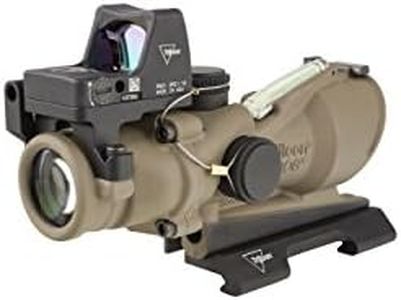
Trijicon 4x32mm ACOG Dual Illumination Green Crosshair Reticle Flat Dark Earth Optics
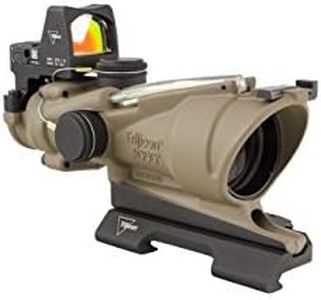
The Trijicon 4x32mm ACOG is a solid choice for an AR-15 sniper scope, especially if you're looking for reliability in tough conditions. It offers a fixed 4x magnification with a 32mm objective lens, which provides a clear and bright image, good for mid-range shooting. One standout feature is its dual illumination system that doesn’t rely on batteries; it uses tritium and fiber optics to automatically adjust reticle brightness based on light conditions. This means you’ll have a clear green crosshair reticle in various lighting, including low light or night vision use, without worrying about battery life.

Rating
10.0
Chosen by1,360
Reticle
Turrets

Most important from
43 reviews

Reticle
The integrated reflex sight offers rapid target acquisition, especially effective against moving targets.
Turrets
The scope allows easy on-the-fly range compensation, enhancing versatility in varied shooting scenarios.
#2
8.5 score

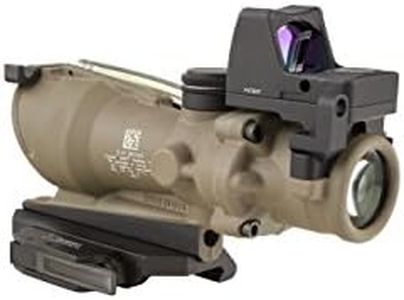
Trijicon ACOG 4 x 32 Scope USMC Rifle Combat Optic for A4
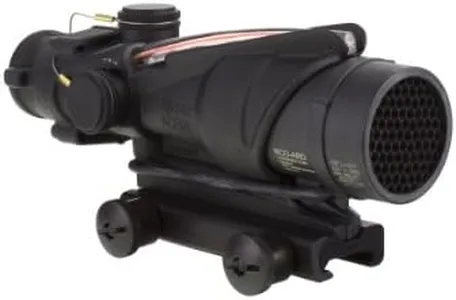
The Trijicon ACOG 4 x 32 Scope USMC Rifle Combat Optic for A4 offers a robust and reliable option for those looking for a sniper scope for an AR-15. The scope features a fixed 4x magnification, which is ideal for medium-range engagements but may not suffice for very long-range shooting. The 32mm objective lens diameter provides a clear and bright image, although it may not be as large as some other sniper scopes in the market which can offer better light transmission in very low light conditions.

Rating
8.5
Eye Relief
Reticle

Most important from
87 reviews

Eye Relief
The eye relief is short, requiring users to get very close to the scope, which might need adjustment if wearing body armor or using a solid stock.
Reticle
Battery-free illumination is a significant advantage, ensuring the reticle brightness adjusts to available light without the need for battery replacements.
#3
8.2 score

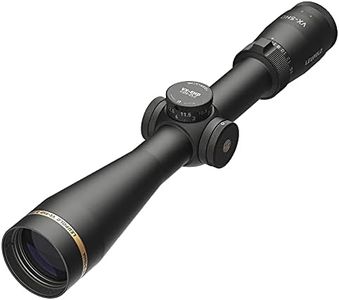
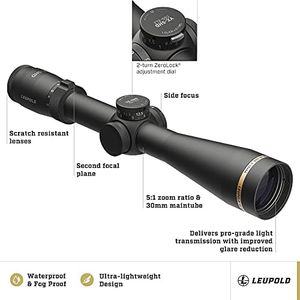
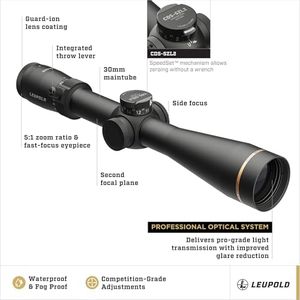
Leupold VX-6HD 3-18x44 (30mm) CDS-ZL2 Side Focus Illum. FireDot Duplex Reticle Riflescope
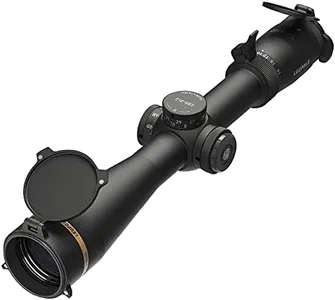
The Leupold VX-6HD 3-18x44 Riflescope is a robust and feature-rich option for those seeking a high-performance sniper AR-15 scope. With its wide magnification range from 3x to 18x, it offers versatility for various shooting distances. The 44mm objective lens diameter ensures good light transmission, enhancing visibility, especially in low-light conditions. The FireDot Duplex reticle is illuminated, aiding quick target acquisition in dim environments, and the Motion Sensor Technology helps conserve battery life by deactivating the illumination when the scope is not in use.

Rating
8.2
Reticle

Most important from
44 reviews

Reticle
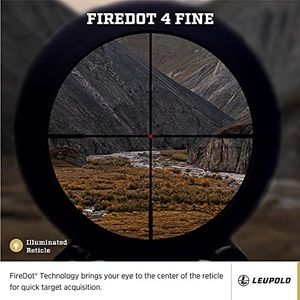
The FireDot reticle is a standout feature, aiding quick target acquisition with an ideal low glow setting.

Top 10 Best sniper AR 15 scopes 2026 in the United States

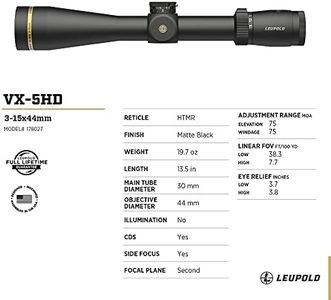
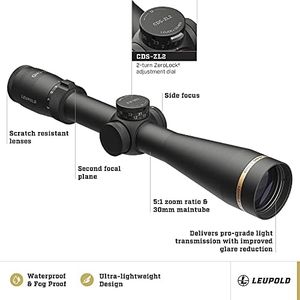
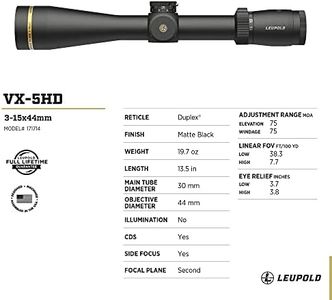
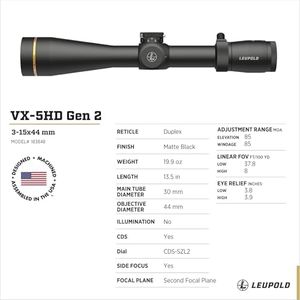
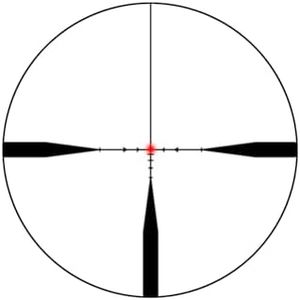
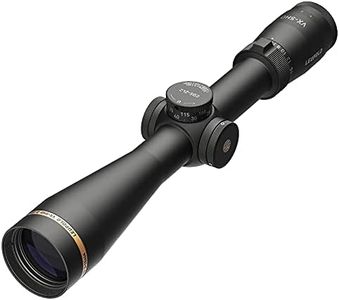
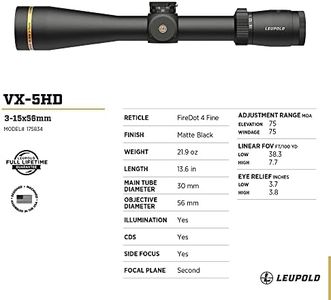
Leupold VX-5HD 3-15x44 (30mm) CDS-ZL2 Side Focus Duplex Reticle Riflescope
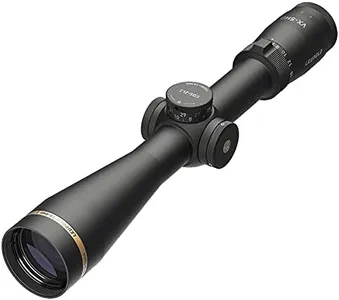
Magnification: 3-15x
Objective Lens Diameter: 44 mm
Reticle: Fine Duplex
Turrets: CDS-ZL2 turret system
Eye Relief: comfortable
Parallax Adjustment: side focus

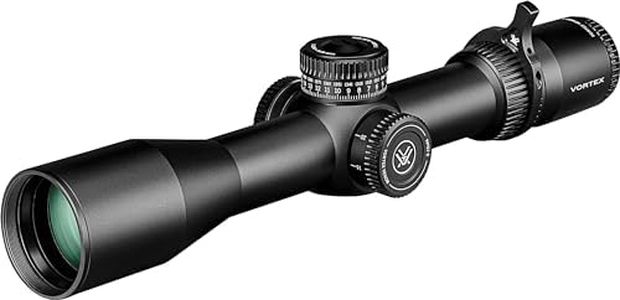
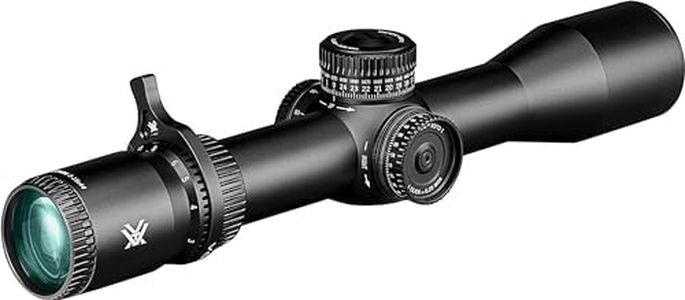
Vortex Optics Venom 3-15x44 First Focal Plane Riflescope - EBR-7C (MOA) Reticle
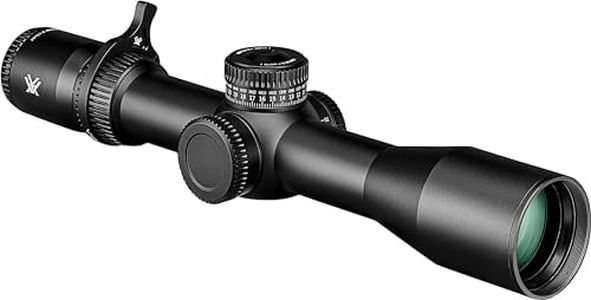
Magnification: 3-15x
Objective Lens Diameter: 44 mm
Reticle: EBR-7C (MOA)
Turrets: Capped windage, exposed elevation
Eye Relief: comfortable
Parallax Adjustment: included
How do we rank products for you?

Our technology thoroughly searches through the online shopping world, reviewing hundreds of sites. We then process and analyze this information, updating in real-time to bring you the latest top-rated products. This way, you always get the best and most current options available.

headphones-stars

Buying Guide for the Best sniper AR 15 scopes

Choosing the right sniper scope for your AR-15 can significantly enhance your shooting accuracy and overall experience. The right scope will depend on your specific needs, such as the type of shooting you plan to do (e.g., hunting, target shooting, tactical use), the distances you will be shooting at, and your personal preferences. Understanding the key specifications of sniper scopes will help you make an informed decision and select the best fit for your AR-15.
MagnificationMagnification refers to how much closer the target appears through the scope compared to the naked eye. This is important because it determines how well you can see and aim at distant targets. Scopes typically have either fixed or variable magnification. Fixed magnification scopes have a single magnification level, such as 4x, which means the target appears four times closer. Variable magnification scopes, like 3-9x, allow you to adjust the magnification within a range. For short to medium-range shooting (up to 300 yards), a lower magnification (1-4x) is sufficient. For longer ranges (300-600 yards), a medium magnification (4-12x) is ideal. For very long-range shooting (beyond 600 yards), higher magnification (12x and above) is necessary. Choose a magnification range based on the distances you plan to shoot and the level of detail you need to see.
Objective Lens DiameterThe objective lens diameter is the size of the front lens of the scope, measured in millimeters. This spec is important because it affects the amount of light that enters the scope, impacting the brightness and clarity of the image. Larger objective lenses (e.g., 50mm) allow more light to enter, providing a brighter image, especially in low-light conditions. However, they can also make the scope heavier and bulkier. Smaller objective lenses (e.g., 32mm) are lighter and more compact but may not perform as well in low-light situations. If you plan to shoot in various lighting conditions, a larger objective lens may be beneficial. For general use and better portability, a smaller objective lens might be more suitable.
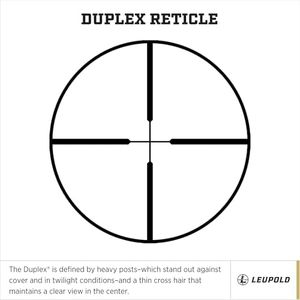
ReticleThe reticle, or crosshair, is the aiming point you see when looking through the scope. Different reticle designs serve different purposes. Common types include duplex, mil-dot, and BDC (bullet drop compensator) reticles. Duplex reticles are simple and easy to use, making them ideal for general shooting and hunting. Mil-dot reticles have dots along the crosshairs that help estimate range and bullet drop, useful for long-range and tactical shooting. BDC reticles have markings that correspond to specific distances, allowing for quick adjustments without manual calculations. Choose a reticle based on your shooting style and the level of precision you need.
TurretsTurrets are the knobs on the scope that allow you to adjust the windage (horizontal) and elevation (vertical) settings. This is important for zeroing your scope and making precise adjustments based on shooting conditions. There are two main types of turrets: capped and exposed. Capped turrets are covered and protect the settings from being accidentally changed, suitable for hunting and general use. Exposed turrets are easier to adjust quickly and are preferred for tactical and long-range shooting where frequent adjustments are needed. Consider how often you will need to make adjustments and choose the turret type that best fits your needs.
Eye ReliefEye relief is the distance between your eye and the scope's eyepiece while still seeing the full field of view. This is important for comfort and safety, especially with high-recoil rifles. Longer eye relief (3-4 inches) provides more flexibility in positioning your eye and reduces the risk of scope eye (injury from the scope hitting your face). Shorter eye relief (less than 3 inches) may offer a wider field of view but requires more precise eye placement. For AR-15 rifles, which generally have moderate recoil, a medium to long eye relief is recommended for comfortable and safe shooting.
Parallax AdjustmentParallax adjustment allows you to correct the parallax error, which occurs when the reticle appears to move relative to the target when you shift your eye position. This is important for maintaining accuracy, especially at longer distances. Scopes with parallax adjustment have a side knob or an adjustable objective lens to fine-tune the focus at different ranges. For short to medium-range shooting, parallax adjustment may not be necessary. However, for long-range shooting (beyond 300 yards), having this feature can significantly improve accuracy. Choose a scope with parallax adjustment if you plan to shoot at varying distances and need precise aiming.

FAQ