We Use CookiesWe use cookies to enhance the security, performance, functionality and for analytical and promotional activities. By continuing to browse this site you are agreeing to our privacy policy

10 Best Solar Charger Controllers 2025 in the United States

#1

Winner

10.0 score

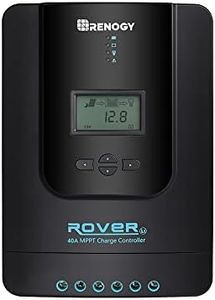
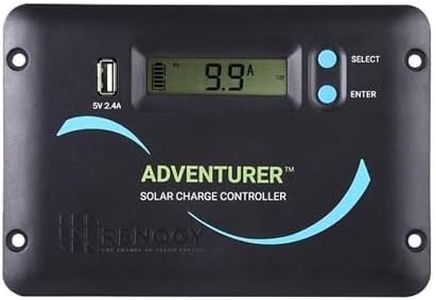
Renogy 60A 12V/24V/36V/48V DC Input MPPT Solar Charge Controller Auto Parameter Adjustable LCD Display Solar Panel Regulator fit for Gel Sealed Flooded and Lithium Battery, Rover 60A
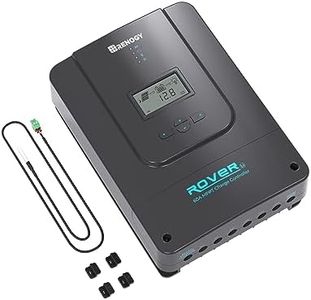
The Renogy 60A MPPT Solar Charge Controller is a robust choice for those needing efficient and reliable battery charging from their solar panels. Its standout feature is the innovative MPPT technology, which boasts up to 99% tracking efficiency, ensuring optimal energy conversion even in less-than-ideal weather conditions. This controller supports multiple voltage systems (12V, 24V, 36V, and 48V) and is versatile enough to handle different battery types, including Gel, Sealed, Flooded, and Lithium batteries.

Rating
10.0
Chosen by1,209
Voltage Rating
Display and Monitoring

Most important from
3683 reviews

Voltage Rating
Performs well in both sunny and cloudy conditions, maintaining proper voltage and amperage.
Display and Monitoring
The Bluetooth interface and mobile app sync easily, making system settings adjustments straightforward.
#2
9.7 score

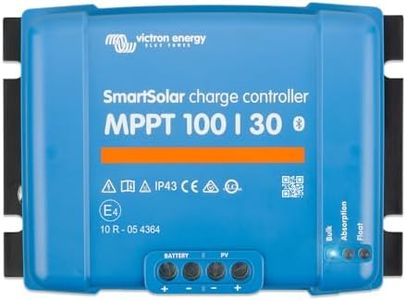
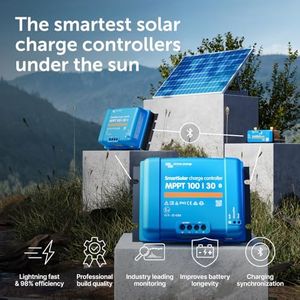
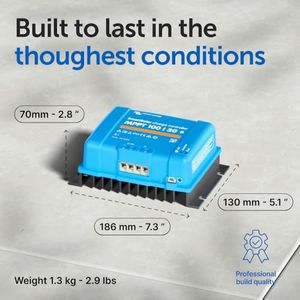
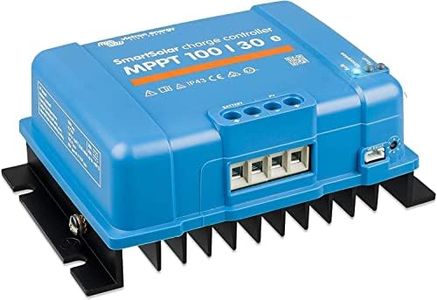
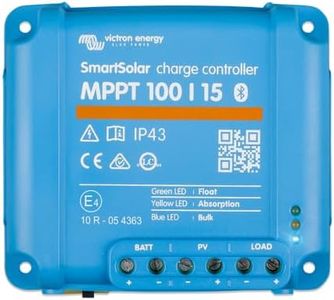
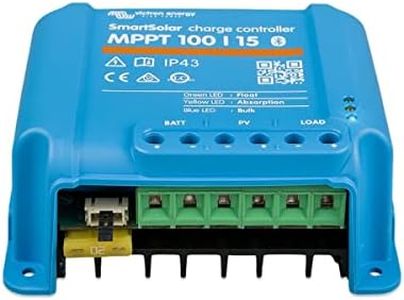
Victron Energy SmartSolar MPPT Solar Charge Controller (Bluetooth) - Charge Controllers for Solar Panels - 100V, 30 amp, 12/24-Volt

The Victron Energy SmartSolar MPPT Solar Charge Controller is a solid choice for solar energy enthusiasts, particularly those looking to maximize energy conversion and battery longevity. Its MPPT (Maximum Power Point Tracking) technology is a key strength, ensuring optimal power output even in shaded conditions, which is superior to PWM (Pulse Width Modulation) controllers. With a current rating of 30 amps and a voltage rating of up to 100V, it supports both 12V and 24V battery systems, offering versatility for different setups. Efficiency is another highlight, as the MPPT system is known for being highly efficient compared to PWM alternatives.

Rating
9.7
Type (PWM vs MPPT)
Efficiency
Display and Monitoring

Most important from
4793 reviews

Type (PWM vs MPPT)
Industrial quality and efficient charging algorithm make it a top choice among MPPT controllers.
Efficiency
The MPPT tracking is fast and the efficiency is phenomenal.
Display and Monitoring
The built-in Bluetooth connectivity in SmartSolar offers superior convenience compared to the BlueSolar, which requires a dongle.
#3
9.4 score

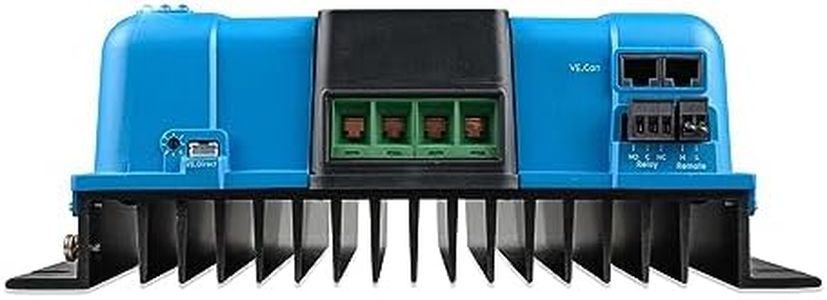
Victron Energy SmartSolar MPPT Solar Charge Controller (Bluetooth) - Charge Controllers for Solar Panels - 150V 35 amp 12/24/36/48-Volt

The Victron Energy SmartSolar MPPT 150V 35 amp solar charge controller is a strong choice if you want efficient solar charging with smart features. As an MPPT type, it excels at maximizing power output from your solar panels, even in less-than-ideal conditions like shading. It supports multiple battery voltages (12/24/36/48V), making it flexible for different systems. The 35-amp current rating and 150V voltage capacity are solid for medium-sized setups, fitting well for home or small off-grid systems.

Rating
9.4
Type (PWM vs MPPT)
Voltage Rating
Display and Monitoring

Most important from
788 reviews

Type (PWM vs MPPT)
This MPPT controller delivers consistent, high-quality performance across various configurations and battery voltages.
Voltage Rating
It reliably charges 12, 24, 36, and 48-volt batteries, adapting well to different solar array setups with smart voltage management.
Display and Monitoring
The Bluetooth-enabled app provides intuitive control and monitoring, allowing easy adjustment of charging parameters from your phone.
Protection Features
The controller can wake up deeply discharged LiFePO4 batteries and resume charging automatically, ensuring dependable battery recovery.
Efficiency
Victron’s reputation as the standard for solar charge controllers is well-earned with this efficient and user-friendly device.

Top 10 Best Solar Charger Controllers 2025 in the United States

#1

Winner

10.0  score

Renogy 60A 12V/24V/36V/48V DC Input MPPT Solar Charge Controller Auto Parameter Adjustable LCD Display Solar Panel Regulator fit for Gel Sealed Flooded and Lithium Battery, Rover 60A

Type (PWM vs MPPT): MPPT
Current Rating (Amps): 60A
Voltage Rating: 12V, 24V, 36V, 48V
Efficiency: up to 99% tracking efficiency
Display and Monitoring: LCD screen, LED indicators, Renogy App
Protection Features: reverse polarity, overcharging, over-discharging

Chosen by 1209 this week

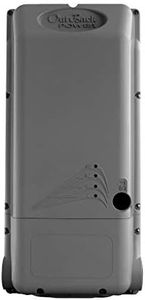
OUTBACK POWER 80AH MPPT Controller

Type (PWM vs MPPT): MPPT
Current Rating (Amps): 80
Voltage Rating: 61 volts (DC)
Display and Monitoring: LED display

OutBack Power FM60-150VDC FLEXMax 60 Charge Controller

Type (PWM vs MPPT): MPPT
Voltage Rating: 12 to 60 volts
Display and Monitoring: LCD, built-in data logger

Victron Energy SmartSolar MPPT Tr VE. Can 150V 100 amp 12/24/36/48-Volt Solar Charge Controller (Bluetooth)
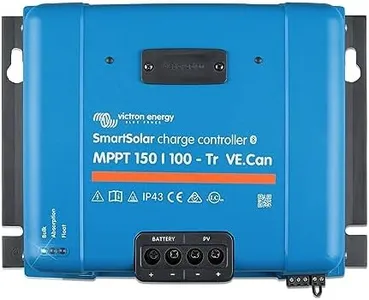
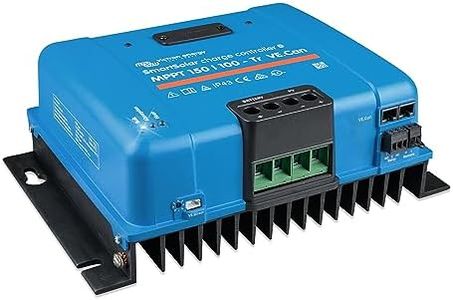
Type (PWM vs MPPT): MPPT
Current Rating (Amps): 100 amps
Voltage Rating: 150 volts
Display and Monitoring: Bluetooth via VictronConnect app
Protection Features: Load output prevents battery damage

MidNite Solar CLASSIC 250 MPPT Solar Charge Controller 250V

Type (PWM vs MPPT): MPPT
Current Rating (Amps): 63 amps
Voltage Rating: 250 volts
Display and Monitoring: reliable monitoring options
Protection Features: DC ground fault protection, battery sensors
How do we rank products for you?

Our technology thoroughly searches through the online shopping world, reviewing hundreds of sites. We then process and analyze this information, updating in real-time to bring you the latest top-rated products. This way, you always get the best and most current options available.

headphones-stars

Buying Guide for the Best Solar Charger Controllers

When choosing a solar charger controller, it's important to understand that this device is crucial for regulating the power going from your solar panels to your batteries. It ensures that your batteries are charged efficiently and safely, preventing overcharging and extending their lifespan. To pick the best solar charger controller for your needs, you should consider several key specifications that will determine its compatibility and performance with your solar power system.
Type (PWM vs MPPT)There are two main types of solar charger controllers: PWM (Pulse Width Modulation) and MPPT (Maximum Power Point Tracking). PWM controllers are simpler and less expensive, making them suitable for smaller systems with lower power requirements. MPPT controllers are more efficient, especially in colder conditions and when the solar panel voltage is significantly higher than the battery voltage. They are ideal for larger systems where maximizing energy harvest is crucial. Choose PWM for basic, cost-effective setups and MPPT for more advanced, high-efficiency systems.
Current Rating (Amps)The current rating of a solar charger controller indicates the maximum amount of current it can handle from the solar panels to the batteries. This is important because it needs to match or exceed the current output of your solar panels to prevent overheating and damage. Controllers typically range from 10A to 60A or more. For small setups, a 10A to 20A controller might suffice, while larger systems may require 30A to 60A or higher. Assess the total current output of your solar panels and choose a controller with a suitable rating.
Voltage RatingThe voltage rating of a solar charger controller must match the voltage of your battery bank. Common ratings include 12V, 24V, and 48V. Some controllers are versatile and can handle multiple voltages. Ensuring the voltage compatibility is crucial for the efficient and safe operation of your solar power system. If you have a 12V battery bank, choose a 12V controller; for a 24V system, a 24V controller, and so on. For systems that might expand in the future, consider a controller that supports multiple voltages.
EfficiencyEfficiency refers to how well the controller converts the energy from the solar panels to the battery. Higher efficiency means less energy is wasted during the conversion process. MPPT controllers generally offer higher efficiency (up to 98%) compared to PWM controllers (around 75-80%). If maximizing energy harvest is important for your application, especially in areas with less sunlight, opt for a high-efficiency MPPT controller. For simpler, less critical applications, a PWM controller might be sufficient.
Display and MonitoringMany solar charger controllers come with built-in displays or the ability to connect to external monitors or apps. These features allow you to monitor the system's performance, including current, voltage, and battery status. This is important for maintaining and troubleshooting your system. Basic controllers might have simple LED indicators, while advanced models offer detailed LCD screens or smartphone connectivity. Choose a controller with the level of monitoring that matches your need for oversight and control.
Protection FeaturesProtection features in a solar charger controller safeguard your system against potential issues like overcharging, short circuits, reverse polarity, and over-temperature. These features are crucial for the longevity and safety of your batteries and other components. Look for controllers that offer comprehensive protection to ensure your system runs smoothly and safely. For critical applications, prioritize controllers with robust protection features.

FAQ